East Valley Tree Service
Storm & Emergency Tree Removal — East Valley, AZ
Published September 18, 2026 · Last reviewed · Gilbert, Chandler, Mesa, Queen Creek & San Tan Valley, AZ (East Valley)
The short answer
As of September 2026, storm-damaged and emergency tree removal in the East Valley typically runs $775–$2,100+ depending on tree size and complexity, and same-day or next-day emergency dispatch commonly costs 2 to 3 times the standard rate for the same job on a non-emergency schedule — call the number above for the fastest routing to a local, insured pro.
East Valley Tree Care · (480) 555-0140 · matching East Valley homeowners with independent, insured tree service companies.
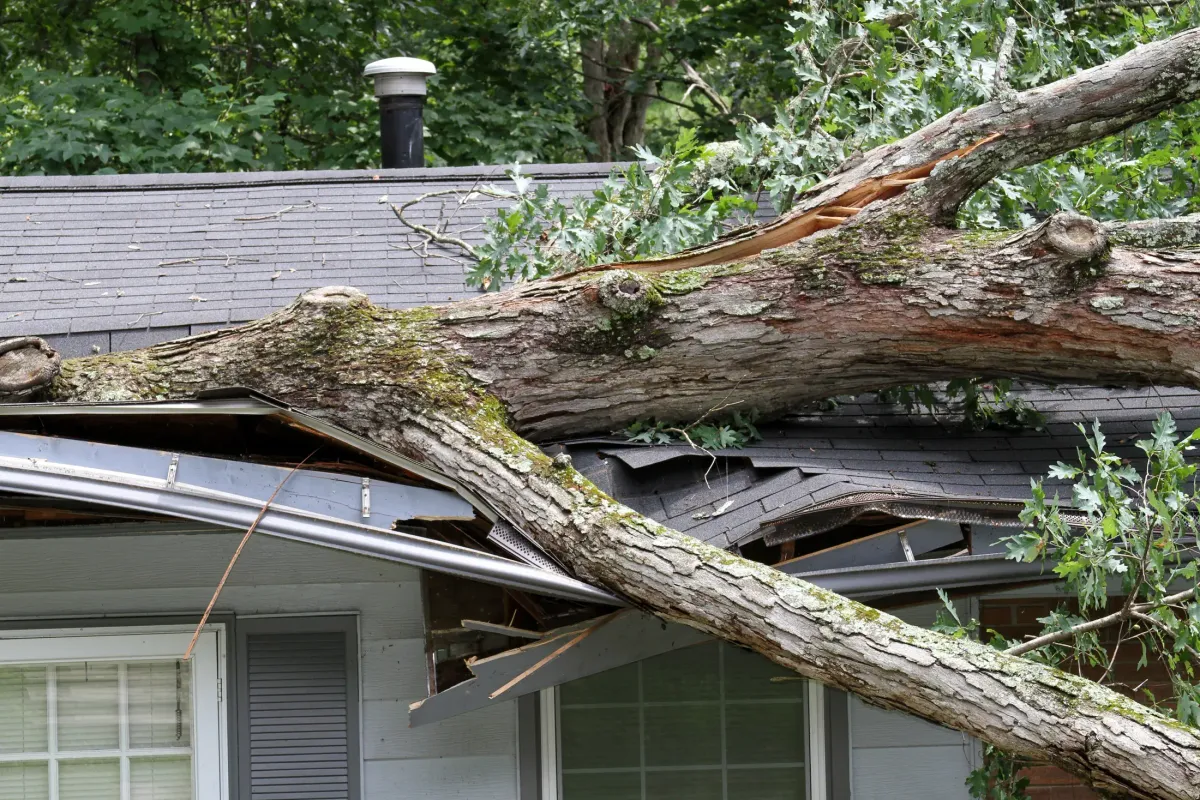
When a monsoon storm brings a tree down — on your roof, across your driveway, or just flat on the ground — the questions that matter are simple: is anyone in danger, what does it cost, and how fast can someone actually get there. Here’s what genuinely helps in that situation, plus real cost and timing expectations for the East Valley.
Why storm and emergency tree calls spike in the East Valley
Search interest in fallen-tree and emergency tree removal isn’t steady through the year here — it moves in sharp spikes tied to real weather. Arizona search data shows “fallen tree removal” queries jumping sharply during actual monsoon and winter storm events, and “emergency tree removal” searches concentrated with Phoenix as the single highest-interest metro in the state for that exact phrase. In plain terms: this isn’t a slow, evenly-distributed service category — demand (and crew availability) genuinely tightens right when a storm just came through Gilbert, Chandler, Mesa, Queen Creek, or San Tan Valley, which is exactly when you need it least tight.
Two AZ-specific risk factors make storm damage to trees more common here than in a lot of climates other cost guides are written for:
- Fast-growing, brittle species in high wind. Sissoo and certain fast-growing ornamental trees common in East Valley landscaping have a reputation locally for limb failure and even whole-tree tip-over in strong monsoon outflow winds, sometimes with surprisingly little warning given how healthy the canopy looks.
- Shallow root systems in clay/caliche soil. Much of the East Valley sits on heavy clay or caliche soil that doesn’t let roots go especially deep, which is part of why a tree that looked perfectly healthy the week before a storm can go over in a single wind event.
If you’re dealing with a leaning or visibly unstable tree that hasn’t fallen yet, our hazard and leaning tree page covers the warning signs specific to these AZ conditions.
What to do right now (read this first if a tree just came down)
The sequence below is the same one insurance adjusters and tree companies both recommend, in the order that actually matters — safety, then documentation, then coverage, then the work itself. See the step-by-step HowTo block for the full sequence with more detail on each step.
The short version: get clear of the tree and any wires, don’t attempt to move debris that’s under tension yourself, photograph everything before it’s touched, call your insurance carrier, and then call a local tree service and describe exactly what you’re seeing.
What storm and emergency tree removal costs
Tree removal in the Phoenix metro (which the East Valley sits inside) averages around $775, with a typical range of $207 to $2,066 depending heavily on size — from roughly $155–$465 for a smaller tree under 30 feet up to $1,025–$2,100+ for a large tree over 80 feet (crane rental, when needed, adds about $530 on top of that). See the full cost guide for the complete size-by-size breakdown.
Storm and emergency situations layer two things on top of that base range:
- Complexity and access. A tree resting on a roof, tangled in a fence line, or blocking the only driveway access takes more careful, section-by-section work than a straightforward open-yard removal — and dead, damaged, or storm-weakened wood is genuinely less predictable to cut safely, which the actual field work reflects in the quote.
- The emergency-dispatch premium. Same-day or next-day service — a crew reprioritizing its schedule to get to you immediately rather than fitting you in during a normal week — commonly runs 2 to 3 times the standard rate for a comparable job. This is a real, well-documented pattern across the tree service industry, not an East Valley-specific markup, and it reflects the actual cost of pulling a crew off other work on short notice.
If the situation allows even a few hours’ wait (the tree is down but stable, nothing is actively at further risk), getting more than one quote is still worth doing — but if a tree is actively resting on a structure or blocking emergency vehicle access to your home, that’s exactly the situation the emergency premium exists for, and most homeowners reasonably pay it.
Insurance and storm tree damage
Homeowners insurance in Arizona generally covers tree removal when a covered peril (wind, storm) caused the tree to fall and it damaged an insured structure, fence, or vehicle — the classic East Valley monsoon scenario of a tree coming down on a roof or a block wall. A tree that falls in open yard without damaging anything is handled less consistently across policies; some cover debris removal up to a set dollar limit, some don’t, and this varies enough that it’s worth an actual call to your carrier rather than assuming either way.
What consistently helps a claim move faster:
- Photos and, ideally, video of the damage before anything is moved or cleaned up
- The date and rough time of the storm event (useful for cross-referencing against actual weather records)
- A written estimate or invoice from the tree company, itemized rather than a single lump sum
- Your policy’s specific tree/debris-removal clause — ask your agent directly rather than assuming standard coverage applies
What a professional storm response actually involves
A real storm-response visit generally moves through:
- Site assessment — confirming what’s actually stable versus what’s still under tension or at risk of further movement, including anything near power lines (which a tree company should never touch directly — that’s the utility’s job).
- Securing the immediate hazard first — in a true emergency, this sometimes means a faster, more limited first pass (cutting a blocked driveway clear, for instance) with full stump/debris cleanup scheduled as a quick follow-up, rather than treating the whole job as one visit.
- Full removal and haul-away — sectioning the tree, removing the debris, and — separately, since it’s priced and scheduled independently — stump grinding if you want the stump gone too.
Choosing a company for emergency work
Arizona does not appear to have a dedicated tree-service/arborist contractor classification through the Registrar of Contractors (ROC), unlike trades such as electrical or plumbing — so “licensed” isn’t the verification question here the way it would be for an electrician. What’s actually worth confirming before an emergency crew starts work:
- General liability insurance — a real requirement given the property-damage risk inherent in storm cleanup near a house, fence, or power line.
- ISA (International Society of Arboriculture) certification, where relevant — a genuine, verifiable credential for tree work, distinct from a state license.
- A written scope before cutting starts, even in an emergency — a rushed verbal agreement is where storm-response pricing disputes most often start.
We recommend confirming both insurance and certification directly with any company before hiring, whether the job is routine or urgent.
Getting matched during a storm event
East Valley Tree Care connects Gilbert, Chandler, Mesa, Queen Creek, and San Tan Valley homeowners with independent, local tree service companies for exactly this kind of situation — tell us what’s happening (tree on the house, blocking access, leaning and unstable) and we’ll route you toward the right level of urgency. No obligation to hire.
FAQ
Storm & Emergency Tree Removal — East Valley, AZ: Questions East Valley Homeowners Ask
How fast can someone come out after a monsoon storm?
It depends on how many other calls are stacked up that day — monsoon storms tend to generate a lot of calls across the East Valley at once — but several of the independent companies we work with offer same-day response specifically for tree-on-house, blocked-driveway, or blocked-road situations, since those get triaged ahead of routine trim requests. Call and describe exactly what's happening (tree down, leaning, blocking access) so you get routed correctly the first time.
How much more does emergency tree removal cost than a scheduled removal?
Same-day or next-day dispatch commonly runs 2 to 3 times the standard rate for a comparable job scheduled during normal business hours. That premium reflects a crew dropping or reshuffling its existing schedule to get to you immediately, not just the complexity of the tree itself — a genuinely dangerous or access-limited job can cost more on top of that for reasons unrelated to timing.
A tree fell on my house — what should I do first?
If anyone is hurt or the damage looks structural (a hole in the roof, a wall pushed in, exposed wiring), call 911 first. Otherwise: get everyone away from the tree and any downed power lines, don't go up on the roof or try to move debris yourself, take photos for insurance before anything is touched, and call your insurance carrier and a local tree service. See our step-by-step section below.
Will my homeowners insurance cover storm tree removal?
Most standard homeowners policies cover tree removal when the tree fell due to a covered peril (wind, storm) AND damaged an insured structure, fence, or vehicle — this is the most common East Valley monsoon scenario. Removal of a tree that fell in your yard without damaging anything is less consistently covered and varies by policy. Call your carrier before paying out of pocket if there's any damage at all, and keep photos and the contractor's invoice for the claim.
Is it safe to try to remove a fallen tree or large limb myself?
Not if it's resting under tension, leaning on a structure, tangled in power lines, or large enough that a chainsaw cut could cause it to shift suddenly — all common after a real monsoon storm. A tree or limb that looks stable can still be under significant spring tension from how it fell, which is a leading cause of serious chainsaw injuries in DIY storm cleanup. This is exactly the kind of job worth calling a professional for.
Do you provide the emergency tree removal yourselves?
No — East Valley Tree Care is an independent referral and matching service. We connect you with local, independent tree service companies who perform the actual work; we never climb, cut, or remove trees ourselves.
Keep reading
Related East Valley tree service pages
Ready to get matched with a local East Valley tree pro?
Tell us what your tree is doing and we'll connect you with an independent, insured pro serving Gilbert, Chandler, Mesa, Queen Creek, or San Tan Valley. No obligation to hire.